The communication illusion: why strong teams still get stuck under pressure
Many teams think they communicate well, until the pressure rises. Then assumptions, silos, and misunderstandings emerge. Discover how to make communication truly visible.
“I didn’t realise we communicated so poorly.”
We hear it more often than you might think. Usually with a laugh. Sometimes a bit awkwardly. And almost always at the moment when a team realises that “getting along well” is not the same as working well together.
On paper, everything runs smoothly. Meetings are polite. The atmosphere is good. Colleagues know each other. There is laughter over coffee. And yet the same team can completely get stuck as soon as pressure, time constraints, or uncertainty come into play.
That is the communication illusion: believing you communicate well because there is little visible conflict.
Good atmosphere is not the same as good communication
In many teams, good relationships are mistaken for strong communication.
That is understandable. When people are friendly, let each other speak, and end meetings without discussion, it feels like collaboration is working well. But that does not always say enough.
Because real communication does not reveal itself when everything is calm. It reveals itself when something is at stake.
When time starts running.
When information is incomplete.
When two teams depend on each other.
When someone has to make a decision without the full picture.
When people must choose between their own task and the bigger picture.
Only then do you see how a team truly communicates.
What happens when pressure increases
In our teambuildings and business games, we often see the same patterns emerge. Not because teams are bad, but because people react predictably under pressure.
Assumptions become facts
Teams want to move forward, so people fill in the gaps themselves.
“I thought you were going to do that.”
“We assumed that had already been decided.”
“That seemed logical to us.”
Under time pressure, asking questions can feel like slowing things down. But that is exactly what creates misunderstandings that become costly later.
Teams become silos
As pressure rises, people often retreat into their own task, department, or expertise.
Everyone is working hard. Everyone is busy. Everyone has good intentions.
But the shared overview disappears. The team is active, but not necessarily aligned. People work alongside each other, instead of truly together.
Information gets stuck
Sometimes information is not shared because no one realises it is important. Sometimes because people assume “others already know”. Sometimes because it seems faster to just keep going.
But in a team, information is rarely neutral. What you do not share may be exactly what someone else needs to make the right decision.
Why a game makes this more visible than a meeting
You can talk about communication for a long time. You can explain models, show slides, and make agreements.
That has its place.
But something different happens when a team must use communication to build something, solve something, or complete a shared challenge.
In a simulation or team game, communication becomes tangible. Not as theory, but as outcome.
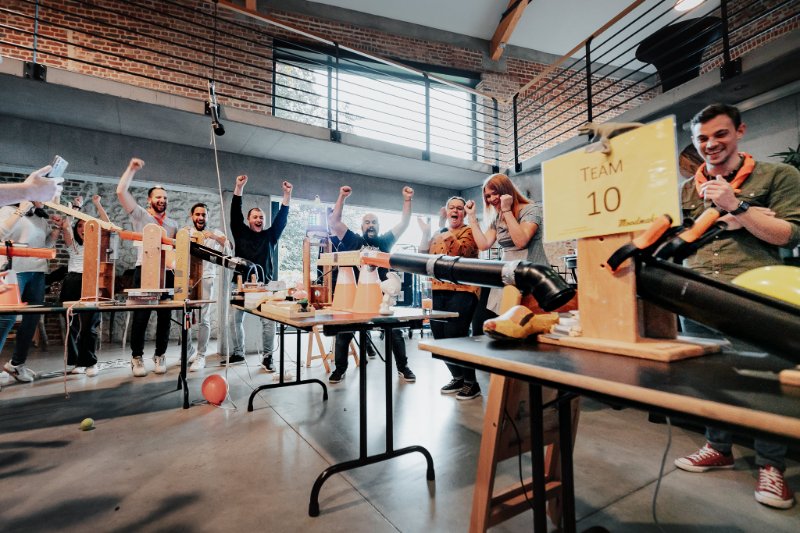
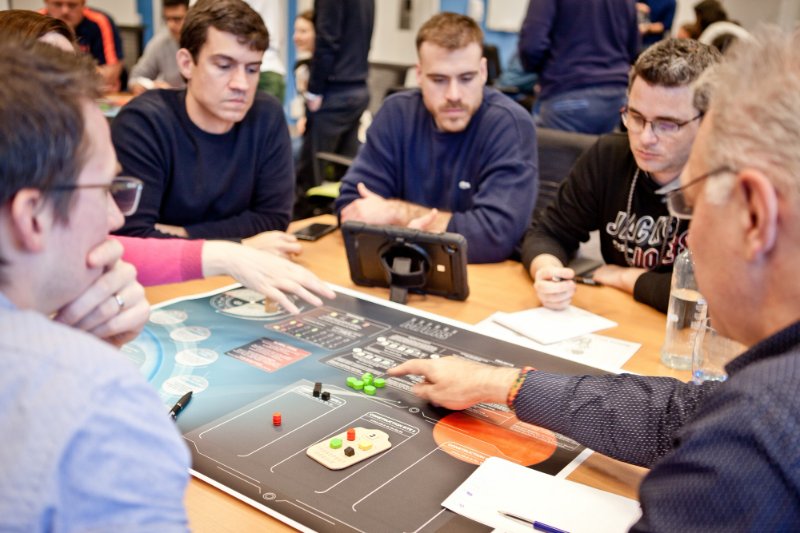
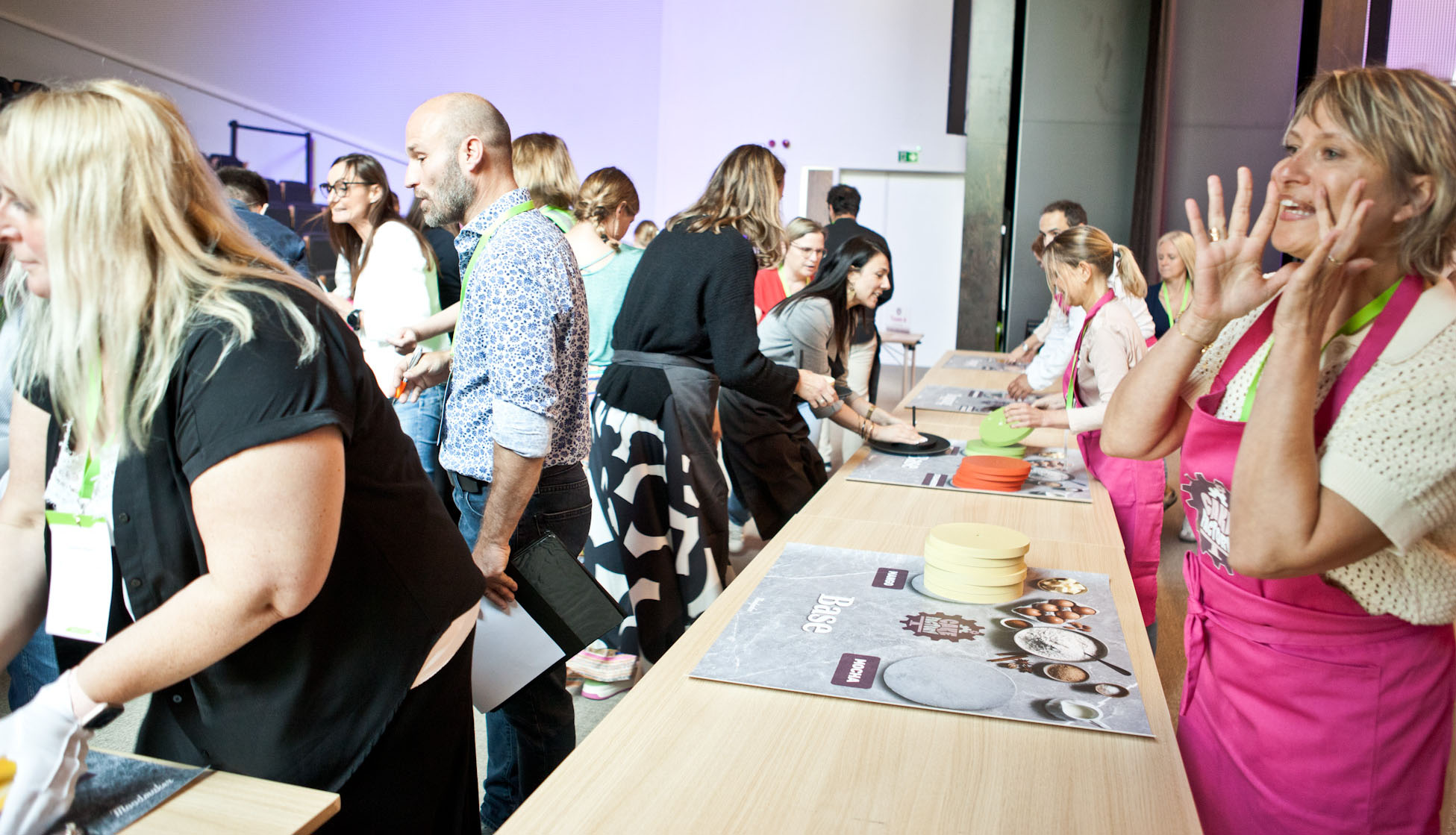
In an activity like Chain Reaction, you quickly see whether teams share information about their part of the whole. In Cake Factory, it becomes clear how well a team plans, aligns, adjusts, and learns from mistakes. In a business game like Before Mars, communication becomes even sharper: teams must make decisions, process information, and choose where to focus their attention.
The interesting part is not that mistakes happen. They always do.
The interesting part is what the team does with them.
Do they listen?
Do they voice assumptions?
Is information shared?
Does someone dare to slow down to align better?
Does the team keep focus on the shared goal?
Those are the moments where collaboration becomes visible.
Failing in a game is often a gift
A chain reaction that doesn’t work. A production line that stalls. A team that suddenly realises everyone was working hard, but no one held the overview.
These are not failures. They are learning moments that stick.
Not because someone is blamed, but because the team sees it themselves.
That is what makes games so powerful. They put behaviour under a magnifying glass without making it heavy or threatening. People laugh, try again, search for solutions, and recognise patterns from their daily work.
The best insights rarely appear when everything goes perfectly. They appear when a team briefly bumps into itself.
The question is not: do we communicate well?
Almost every team is happy to answer “yes” to that.
The better question is:
How do we communicate when it gets tense?
When time is tight. When the task is complex. When departments depend on each other. When not everyone has the same information. When the goal is clear, but the path is not.
That is where the truth sits.
And that is exactly where a good teambuilding can do more than fill an enjoyable afternoon. It can let a team feel how collaboration really works. With fun, energy, and a shared experience as the starting point.
Not as a lesson.
Not as an evaluation.
But as a moment where people experience something together and afterwards look differently at how they work.
What does your team take away?
A strong communication-focused teambuilding does not need to be heavy. On the contrary. The more playful and safe the context, the easier people participate.
But behind the fun, something can become visible:
that discussions sometimes happen too late;
that assumptions form faster than you think;
that teams under pressure turn inward;
that silence is also communication;
that one shared goal is stronger than five separate tasks.
And above all: that better communication does not start with talking more, but with aligning better.
Suitable activities for this insight
Do you want to make communication, collaboration, or decision-making visible? These formats fit this theme well.