Competitive or collaborative team building: what suits your team best?
Competition can bring a lot of energy to a team. Collaboration, on the other hand, often creates stronger connections and a more relaxed atmosphere. The right choice mainly depends on your group and the objective you want to achieve.
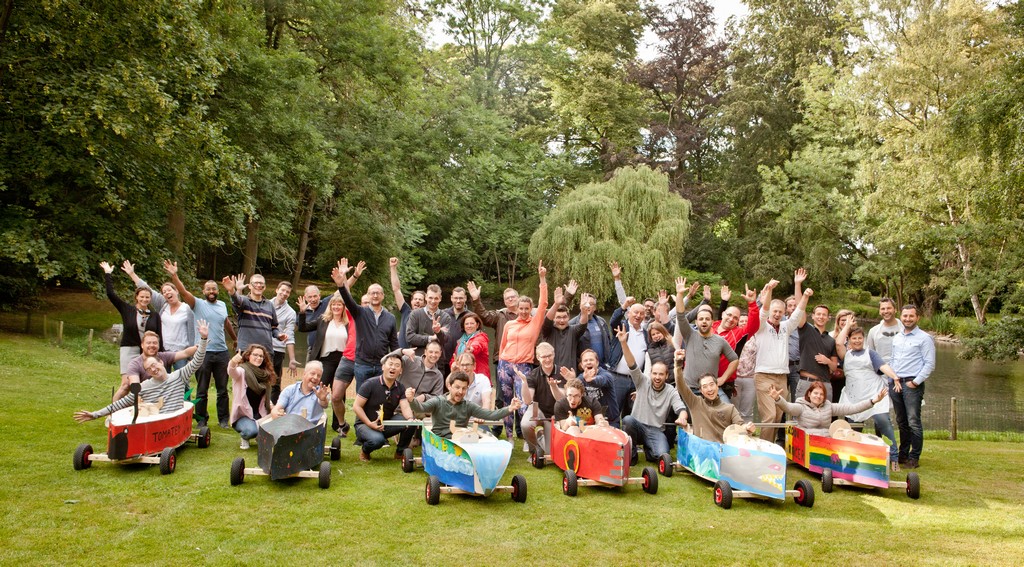
Some teams are instantly energised by a scoreboard. Others disengage as soon as winners and losers appear. Some groups are looking for challenge, pace and a healthy dose of competition. Others mainly need one shared goal to work towards together.
So the question is not: is competitive team building better than collaborative team building?
The better question is: what type of energy fits your team today?
Both approaches can work. A competitive activity can bring fun, energy and momentum. A collaborative activity can bring people closer together and help them experience what it really takes to achieve something as a team.
The key is not to choose a format simply because it sounds fun, but because it fits your group, your context and your objective.
What is competitive team building?
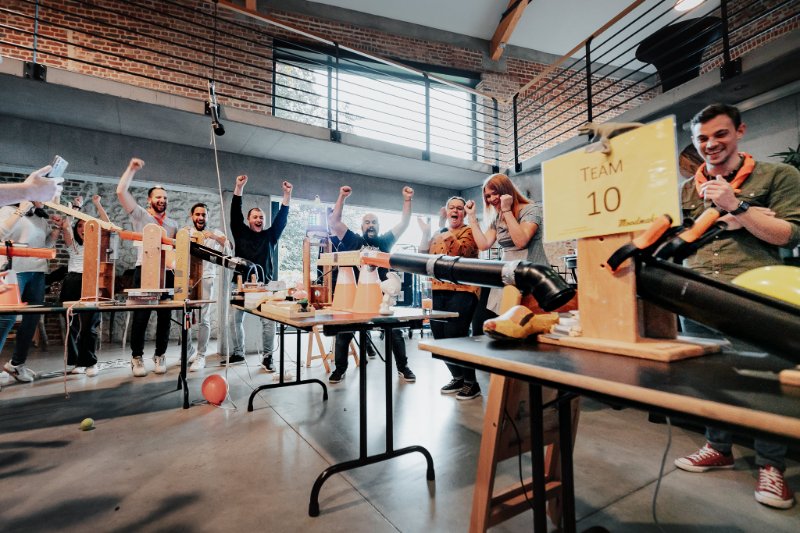
In competitive team building, participants work individually or in smaller teams towards a clearly defined challenge. There is a mission, an objective, a clock, a score or another form of playful tension.
This does not need to be harsh or aggressive. Good competition in team building is playful, safe and well framed. It is not about setting people against each other. It is about creating energy.
Competition often works well with teams that enjoy pace, challenge and visible progress. Think of sales teams, young teams, project teams or colleagues who like being pushed and stimulated.
What does competitive team building reveal?
Competition quickly makes behaviour visible. Not because people need to be put under pressure, but because a game context naturally reveals how people react.
Who takes initiative?
Who stays calm?
Who wants to win?
Who keeps the overview?
Who listens first and acts afterwards?
This can be very valuable, especially when the atmosphere stays light and everyone can laugh about it afterwards.
A competitive activity can also create a lot of group energy. Winning feels good, but trying to win together often feels even better. The best moments rarely happen when one person shines, but when a team realises: we can only succeed if we rely on each other.
When is competition less suitable?
Competition is not always the right choice.
If there is already tension within the team, if departments are positioned against each other, or if people quickly feel judged, a highly competitive format can have the opposite effect.
In very mixed groups, where people do not know each other well or where hierarchy plays a strong role, it is also wise to carefully balance competition.
This does not mean avoiding it completely, but ensuring it is well facilitated and choosing a format where fun remains more important than winning.
What is collaborative team building?
In collaborative team building, the group works towards one shared goal. There are no separate winners or losers. Either the group succeeds together, or it does not.
This creates a very different dynamic.
The focus shifts from “us versus them” to “how do we make this work together?”. Participants need to share information, take roles, listen, adapt and sometimes let go of their own solution in favour of the bigger picture.
This makes collaborative team building particularly suitable for teams that want to strengthen connection, trust or cooperation.
What does collaborative team building reveal?
Collaboration sounds simple until you actually need it in a game context.
Suddenly it becomes clear who keeps an overview, who notices details, who helps others, who gets stuck in their own task, and who bridges between different groups.
A collaborative activity helps people experience that collaboration is more than being nice to each other. It is also about sharing information, making decisions, respecting agreements and adjusting when needed.
And precisely because there is no traditional winner, the focus shifts to the group result. This can be very powerful for teams made up of different departments, newly formed teams, or teams looking to regain direction after a busy period.
When to choose competition?
Competitive team building is a strong fit when you are looking for:
energy and fun
pace and challenge
a playful competitive element
visible enthusiasm
healthy group tension
an activity that instantly creates atmosphere
It is a great choice for groups that enjoy laughing, trying, winning, losing and trying again.
Especially within a Fun & Connection context, competition can work perfectly as long as the tone stays light. Participants can get competitive, but it should remain enjoyable.
When to choose collaboration?
Collaborative team building is a strong fit when you are looking for:
stronger connection between colleagues
better cooperation across teams or departments
improved communication
a shared experience
an activity where everyone can take a role
fun with an extra layer of meaning
This type of activity often fits well within a Play & Purpose approach. The experience remains playful, but naturally highlights communication, roles, choices and group dynamics.
It does not need to become heavy or overly reflective. Sometimes it is enough that people leave with the feeling: this only worked because we did it together.
Often, the best team building combines both
In practice, competitive and collaborative are not absolute opposites.
A strong team building can start with small teams competing against each other and end with one shared group challenge. Or the other way around: a group collaborates throughout the activity but still experiences scores, deadlines or challenges that add energy.
This is often the most effective format, especially in business contexts where fun matters but you also want people to take something meaningful away.
You then do not get a theoretical exercise about teamwork, but a living experience where collaboration becomes naturally visible.
The right choice starts with your team
Do you mainly want to create atmosphere after a busy period? A light, fast and competitive format can be ideal.
Do you want to bring departments closer together? A collaborative approach will likely be stronger.
Are you preparing a high-energy kick-off? Competition can be a great driver.
Do you want people to experience communication or role distribution? A collaborative challenge is often more suitable.
And if you are unsure, that is completely normal. Most groups do not fit neatly into one box. That is why the right choice always starts with a simple analysis: who is participating, what is the context, what is the energy level in the team, and what do you want people to remember afterwards?
Successful team building does not need to choose between fun and impact. The best formats combine both in the right balance.
Activities Related to This Insight
Do you want to find out whether competition, collaboration, or a mix of both best fits your team? These formats quickly reveal group energy and collaboration dynamics.