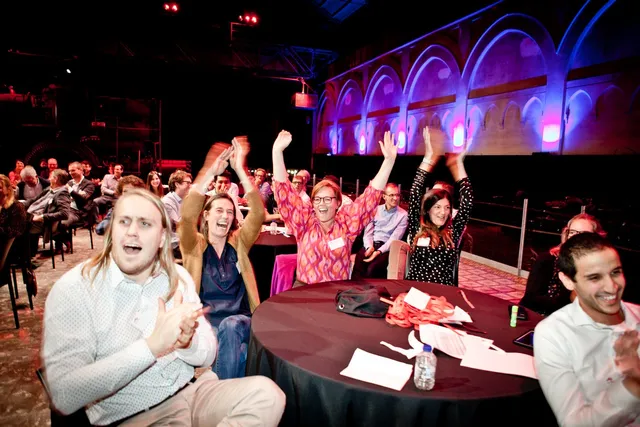
How to organise a team building that really works?
A good team building doesn’t start with the activity, but with the right decisions beforehand. With these practical tips, you can turn your team day into a moment that truly fits your group.
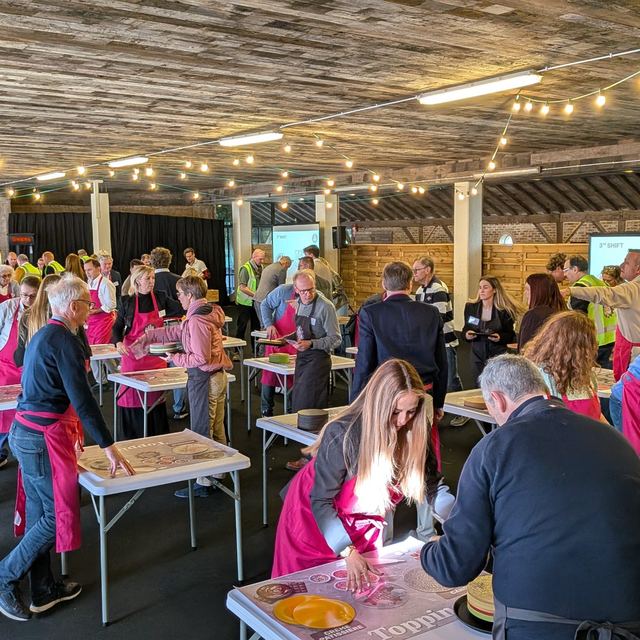
Organising a team building activity seems simple. You pick a date, book an activity, arrange a location, and you’re done.
But anyone who has experienced team days more than once knows the difference is usually found elsewhere. Is the group complete? Does the activity match the team’s energy? Is there enough breathing room in the schedule? And does the moment feel like something people genuinely want to take part in, rather than an obligation?
A successful team building therefore doesn’t start with the question: “What can we do?”
It starts with: “What does this group need right now?”
Choose a date when your team can truly participate
A team building only works if the right people are there. That sounds obvious, but in practice, a team day is sometimes planned at a moment when many colleagues are absent, just returning from holiday, or right in the middle of a tight deadline.
In those cases, your team building already starts at a disadvantage.
So don’t just look at an empty slot in the calendar. Look at the wider context. Is it right after a heavy sprint? Just before an important delivery? During holiday season? Or at a moment when the team could really use some shared energy?
A small practical tip: Thursdays and Fridays are popular, but they also get booked quickly. Considering a Monday, Tuesday, or Wednesday often gives you more choice in locations, facilitators, and timing. For larger groups in particular, this can make a real difference.
Start from your group, not from the activity
An activity can sound fantastic on paper and still fail for your team. Not because the activity is bad, but because the match isn’t right.
Some groups mainly need relaxation. They want to laugh, move, talk, and see each other outside the daily work context. Other groups benefit from more challenge. Think of teams starting a new year, going through change, aiming to improve collaboration, or simply ready for something with more intensity.
That’s why the best choice is not automatically the most spectacular, the most sporty, or the cheapest activity. The best choice is the one that fits the people in front of you.
Ask yourself a few simple questions in advance:
Do we mainly want to relax or also open up discussion?
Is this a group that enjoys being active, or prefers creative or strategic work?
Should everyone be able to participate easily?
Is competition allowed, or should it stay mainly about connection?
Is there a specific reason, such as communication, collaboration, change, or onboarding?
When these questions are clear, the choice becomes much easier.
Don’t let budget be the only filter
Of course, budget matters. That’s logical. But choosing a team building purely based on price is rarely the best starting point.
The real cost of a team day goes beyond the invoice. You free up colleagues’ time, take people out of their normal work rhythm, and create a moment where everyone comes together. You want that moment to feel right.
An activity that doesn’t fit the group rarely feels like a good decision afterwards, even if it looked attractive from a practical or financial point of view.
That doesn’t mean everything needs to be big or complex. Sometimes a simple, well-facilitated activity is exactly what a team needs. But the choice should be intentional.
Don’t fill the day completely
A good team day needs breathing space.
If every minute is scheduled, colleagues have little room for spontaneous conversation. Yet those informal moments are often the most valuable: arriving without stress, debriefing after an activity, sharing a drink, laughing about what just happened.
A team building is not a regular workday in a different package. It’s a shared experience. And shared experiences need rhythm.
That doesn’t mean the day should be loose or slow. A strong activity can bring energy, pace, and real engagement. But before and after the activity, there should be space. That makes the experience more human and often more meaningful.
Choose facilitation that can read the group
A team building doesn’t depend only on the concept. The facilitator makes a big difference.
A good facilitator senses when a group needs more energy, when something should be shortened, when there is space for humour, and when an instruction should be made a bit sharper. This is especially important with professional groups.
You don’t want a school trip vibe. But you also don’t want a stiff training atmosphere.
The right tone sits somewhere in between: warm, clear, energetic, and professional. People should feel safe to participate without anything feeling forced.
Include a short reflection afterwards
Not every team building needs a formal debrief. Sometimes the goal is simply to enjoy time together and recharge. That is perfectly valid.
But it is still smart to briefly reflect afterwards on how the day was experienced. This can be very simple: a short internal survey, a conversation with a few participants, or an evaluation with the organiser.
Don’t just ask whether people enjoyed it. Also ask:
Did the activity fit the group?
Was the timing right?
Did the location work well?
Was the facilitation clear and pleasant?
What would we repeat next time?
What should be changed?
This feedback helps you make the next team day even stronger. And often, it also tells you something about your team itself.
A successful team building doesn’t feel accidental
The best team building experiences feel effortless, but they are rarely successful by chance.
They start with the right question. They take the group into account. They choose an activity that fits the moment. They leave space for fun, movement, conversation, and surprise.
And above all: they don’t feel like an obligatory break in the schedule, but like a moment where colleagues genuinely experience something together.
That is where a good team building makes the difference.
See some of our top picks
Do you want to make communication, collaboration or decision-making visible? These team building activities fit this theme well.